

 See My Latest Article on HelloNation

A collision can damage more than the visible body panels. Even a low-speed impact may affect the suspension, steering, wheels, tires, or the parts that hold the wheels at their intended angles. Because alignment problems are not always obvious, an alignment check is often a sensible part of collision safety evaluation.
Does every collision require a wheel alignment?
No. Not every crash causes alignment damage, especially when the impact is limited to a bumper cover or an outer body panel. However, an alignment inspection is appropriate when a collision involves a wheel, tire, suspension component, steering part, subframe, or the area around the vehicle’s corner.
The need depends on factors such as:
- Where the vehicle was hit
- How hard the impact was
- Whether a wheel struck a curb, median, pothole, or another vehicle
- Whether the vehicle was pushed sideways
- Whether suspension or steering parts were replaced
- Whether the vehicle shows new handling or tire-wear symptoms
A vehicle can appear straight and still have alignment angles outside the manufacturer’s specifications. Alignment measurements provide information that a visual inspection alone may miss.
What does a wheel alignment actually correct?
A wheel alignment adjusts the relationship between the wheels and the vehicle. The main alignment angles are camber, toe, and caster.
- Camber describes whether the top of a wheel leans inward or outward when viewed from the front.
- Toe describes whether the front edges of the tires point slightly toward or away from each other when viewed from above.
- Caster affects steering stability and the vehicle’s ability to return toward center after a turn.
These angles work together. A small change in one area can affect steering feel, tire wear, road tracking, and the vehicle’s overall stability.
Alignment does not repair bent or broken parts. If a control arm, tie rod, knuckle, strut, wheel, subframe, or other component is damaged, that part must be properly repaired or replaced before alignment adjustments can produce a reliable result.
What are the signs that an alignment may be needed after a crash?
The most recognizable warning sign is a vehicle that pulls to one side on a reasonably flat, straight road. Other symptoms can include:
- The steering wheel is off-center while driving straight
- The vehicle feels unsettled or wanders
- The steering does not return normally after a turn
- One tire shows faster wear on an inside or outside edge
- The vehicle feels different when braking or accelerating
- A tire rubs against a wheel well or suspension component
- The steering wheel vibrates, particularly at certain speeds
- The vehicle sits unevenly on one side
Not every symptom proves an alignment problem. Tire pressure, tire damage, a bent wheel, worn suspension components, road slope, and braking issues can produce similar sensations. A proper inspection helps separate alignment concerns from other problems.
Can a car drive straight even if it needs an alignment?
Yes. A vehicle may drive acceptably for a short distance even when alignment measurements are incorrect. Some alignment changes are subtle, especially when the steering wheel remains close to centered.
This does not mean the condition is harmless. Incorrect alignment can gradually wear tires, reduce predictable handling, and place additional stress on steering and suspension parts. A vehicle may also track differently on wet, icy, or uneven pavement than it does during a short test drive.
For residents dealing with winter conditions in the area, this matters because snow, ice, potholes, and packed road surfaces can make small handling problems more noticeable. A vehicle that already pulls or wanders may be harder to control when traction is limited.
Is an alignment needed after a front-end collision?
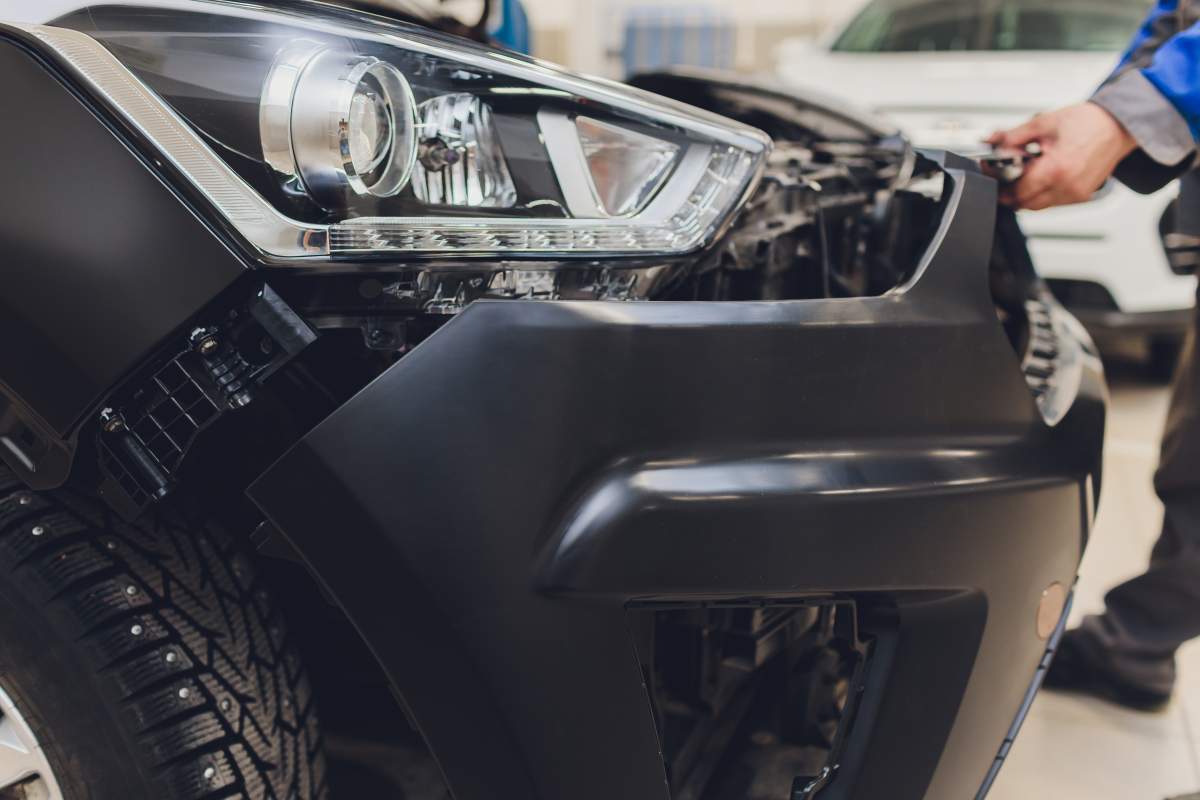
Often, yes—but the collision damage must be evaluated first. A front-end impact can affect tie rods, steering knuckles, control arms, struts, wheels, tires, and the subframe. Even if the bumper and hood are the most visible damage, force may have traveled into the suspension.
A front-end alignment should generally occur only after:
1. Damaged steering and suspension parts have been identified.
2. Bent or unsafe components have been repaired or replaced.
3. Wheels and tires have been inspected.
4. Sensors and related systems have been checked when required.
5. Alignment readings have been compared with the vehicle manufacturer’s specifications.
If alignment equipment cannot bring the angles into specification, that may indicate remaining structural or suspension damage rather than a simple adjustment issue.
What about a rear-end or side-impact collision?
A rear-end collision can affect rear suspension components, the rear axle or suspension beam, wheels, tires, and the vehicle’s thrust direction. The rear wheels do not steer in the same way as the front wheels, but their position still influences how the vehicle travels.
A side impact is especially likely to involve a wheel, tire, hub, bearing, control arm, or other corner assembly. A vehicle may also be pushed sideways into a curb or another object, creating damage that is not obvious from the main impact area.
Four-wheel alignment measurements may be useful after either type of crash, particularly when the vehicle feels unusual, a wheel was struck, or suspension work was performed.
Does replacing a tire or suspension part automatically mean an alignment?
Not automatically, but alignment should be considered. Replacing a tie rod, control arm, strut, steering knuckle, or similar part can change wheel geometry. Some replacement procedures are more likely than others to affect alignment angles.
Replacing only a damaged tire does not necessarily create an alignment problem. However, if the tire was damaged in a collision, the force that damaged it may also have affected the wheel or suspension. A new tire can hide the evidence of the original impact without correcting the underlying issue.
The same principle applies to a wheel replacement. A straight replacement wheel may solve a vibration or air-loss problem, but it does not correct altered suspension geometry.
Can an alignment check identify hidden collision damage?
It can provide useful evidence, but it cannot identify every type of damage by itself. Alignment readings may show that a wheel cannot be adjusted into specification or that the vehicle’s angles are uneven from side to side. Those results can point to a bent component, shifted mounting point, or structural concern.
A complete collision evaluation may also require checking:
- Suspension mounting points
- Steering components
- Wheel and tire runout
- Hub and bearing condition
- Subframe position
- Underbody and structural areas
- Electronic safety systems affected by the impact
Alignment equipment is a measurement tool, not a substitute for a full inspection.
How long can you wait before checking alignment?
If the collision involved a wheel, tire, steering, suspension, or a strong impact, delaying the inspection can increase the chance of tire damage or continued handling problems. Driving should be minimized if the vehicle pulls sharply, the steering wheel is substantially off-center, a tire rubs, a wheel appears damaged, or the vehicle feels unstable.
A vehicle with minor cosmetic damage and no change in handling may not need immediate alignment work, but an inspection is still reasonable if there is uncertainty about where the impact force traveled.
The practical answer is straightforward: an alignment is not required after every collision, but it should be checked whenever impact forces may have reached the wheels, suspension, steering, or vehicle structure. A vehicle that appears normal can still have alignment measurements that affect tire life and handling, so the decision should be based on the collision pattern, inspection findings, and manufacturer specifications rather than appearance alone.