
 See My Latest Article on HelloNation
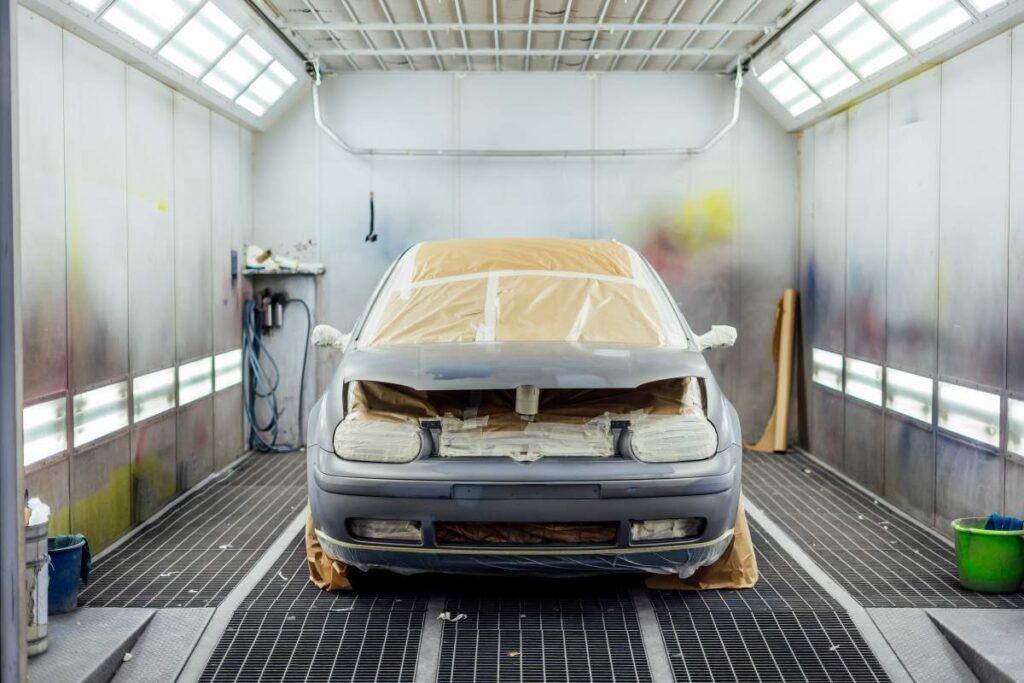
A vehicle’s paint color is rarely identified by sight alone. After collision damage, repair technicians use factory information, computerized color databases, paint samples, and careful blending techniques to make the repaired area look consistent with the surrounding panels.
For residents in Sioux City, IA, this process can be especially noticeable during bright summer sunlight, winter glare, or after road treatments leave a vehicle covered in salt and grime. A repair may be structurally sound but still look uneven if paint color, texture, or finish is not matched correctly.
How is a vehicle’s paint color identified?
The first step is usually locating the vehicle’s factory paint code. This code is different from the vehicle identification number and may be printed on a label or plate in places such as:
- The driver-side door frame
- The glove compartment
- The trunk or spare-tire area
- Under the hood
- The vehicle owner’s documentation
The code gives the paint technician a starting formula. It identifies the original color family and the manufacturer’s intended mixture, but it does not always produce a perfect match by itself.
The same paint code can have several variations. Automakers may use slightly different formulas during different production periods or at different assembly plants. A vehicle that has spent years outdoors may also have faded, oxidized, or changed in appearance. For that reason, the code is an important reference, not the final answer.
Why does the same paint code sometimes look different?
Factory paint can change over time because of sunlight, weather, washing, road debris, and chemical exposure. Clear coat deterioration may make an older panel appear duller or lighter than a newly painted replacement panel.
Color can also appear different depending on the panel’s location and angle. A vertical door, curved fender, and horizontal hood reflect light differently. Metallic and pearl finishes are particularly sensitive to viewing angle because their small reflective particles change how the color appears.
Other factors include:
- Previous refinishing or repainting
- Wax, polish, or ceramic coating
- Localized fading from sun exposure
- Scratches that expose a different layer beneath the finish
- Variations in factory application
- Differences in paint thickness or spray technique
This is why simply mixing paint according to a code may not be enough to create a visually seamless repair.
How do technicians compare paint to the vehicle?
After finding the paint code, a technician examines the undamaged paint near the repair area. The goal is to determine how the vehicle’s current finish compares with the original factory color.
Many collision repair facilities use a handheld color-measuring device, often called a spectrophotometer. The device reads the way light reflects from the vehicle’s surface and sends that information to a paint-mixing computer. The system compares the reading with known formulas and suggests a starting mixture.
The surface must be prepared properly before measuring. Dirt, wax, oxidation, and heavy scratches can affect the result. Technicians may clean and polish a small area first, then take readings from more than one location. Multiple measurements can reveal whether the color is consistent across the vehicle or whether some panels have faded differently.
Computerized tools improve accuracy, but they do not replace visual judgment. A trained technician still compares sample colors under different lighting conditions.
What is a spray-out card, and why is it used?
A spray-out card is a test panel used to evaluate a mixed paint formula before it is applied to the vehicle. The technician sprays the proposed color onto the card using a similar process to the planned repair.
The card is then compared with the adjacent vehicle panel. If the color is too light, too dark, too blue, too yellow, or otherwise uneven, the mixture can be adjusted before the vehicle is painted.
This step is especially helpful with:
- Metallic finishes
- Pearl or mica colors
- Three-stage paint systems
- Older vehicles with faded paint
- Colors that have several factory variations
A formula that looks correct in a mixing cup may appear different after spraying and drying. The spray-out card shows how the color behaves as an actual painted surface.
Why is blending used instead of painting only the damaged panel?
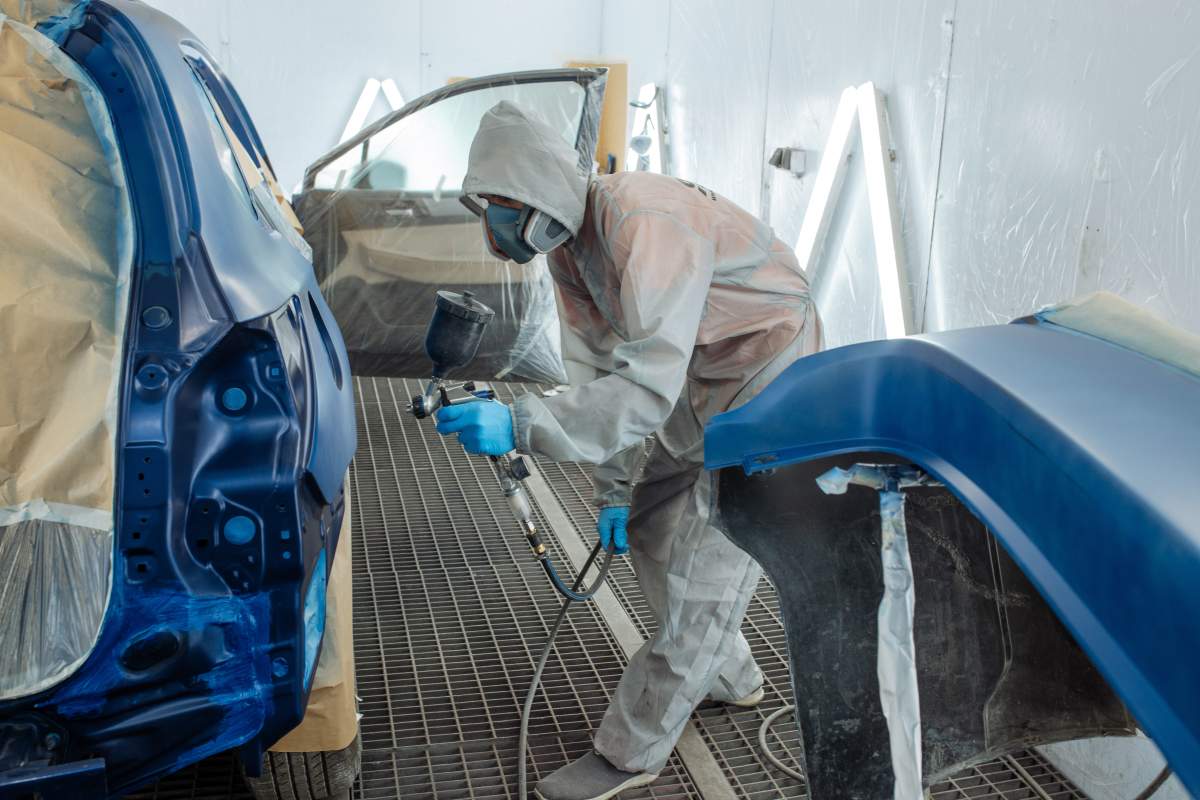
Blending means gradually extending the color into an adjacent panel so that a small difference is not visible at the panel edge. The repaired panel receives the primary color, while the neighboring panel receives a controlled transition.
Blending is often used because a perfect match between new paint and older surrounding paint may be difficult, even with accurate measurements. It helps the eye move gradually from the repaired area to the original finish instead of stopping at a sharp color boundary.
The clear coat may also be applied across the full repaired panel and, depending on the repair plan, the blended area. Proper preparation and masking are necessary so the transition does not create a visible line, ridge, or change in gloss.
Blending does not mean hiding poor workmanship. It is a standard refinishing method used to account for normal differences in vehicle age, paint history, and light reflection.
Do metallic and pearl colors require special care?
Yes. Metallic and pearl finishes are more difficult to match because their appearance depends on both color and particle orientation.
Metallic paint contains reflective flakes. If those flakes are laid down differently during spraying, the panel may appear lighter, darker, or noticeably different from another panel with the same basic color.
Pearl finishes use translucent particles that reflect and transmit light in distinctive ways. Some vehicles use a three-stage process involving a base color, a pearl layer, and a clear coat. The number of coats can affect the final appearance, so consistent spray technique is essential.
Temperature, humidity, air pressure, gun distance, and spray overlap can all influence the finish. A correct formula can still look wrong if it is applied differently from the surrounding paint.
How do lighting conditions affect paint matching?
Paint should be evaluated under more than one type of light. A color may look correct in a shop’s fluorescent lighting but appear different in daylight or under parking-lot lights.
Useful comparisons may include:
- Natural daylight
- Bright indoor lighting
- Lower-angle light that reveals surface texture
- Direct sunlight, when practical and safe
The changing light conditions common in Northwest Iowa can make these differences easier to notice. Bright snow, low winter sun, and wet pavement can all increase reflected glare. A finish that appears acceptable in shade may show a mismatch in direct light.
Technicians also look beyond color. Gloss level, orange-peel texture, overspray, panel alignment, and the sharpness of body lines affect whether the repaired area appears consistent.
Can a repaired panel ever look slightly different?
Yes. A visible difference does not always mean the paint work was careless. Older paint may have changed over time, and certain colors are inherently more difficult to reproduce exactly.
However, a noticeable mismatch, hard blend line, cloudy metallic appearance, or major difference in gloss deserves attention. A proper quality check should be performed in more than one lighting condition and from several viewing angles.
Vehicle owners can help by inspecting the repair in daylight after the vehicle is clean. It is also reasonable to ask what areas were painted, whether blending was used, and whether the finish was checked under multiple lighting conditions.
What should vehicle owners know about paint matching after winter damage?
Road salt, sand, gravel, and freeze-thaw cycles can affect both the original finish and a repaired area. Salt residue can hide color differences, while chips and surface contamination may make a panel appear rough or dull.
After a winter collision repair, gentle washing can remove residue and provide a clearer view of the finish. Harsh scrubbing, aggressive polishing, or automatic washing immediately after refinishing may interfere with curing instructions, so care guidance should be followed.
Paint matching is a combination of factory information, measurement, test spraying, application technique, and visual inspection. The most reliable results come from treating the vehicle’s actual condition—not just its original color code—as the basis for the repair.